- What Is Academic Conference Management Software?
- Why Conference Management Software is a Necessity in 2026?
- Key Features to Look For
- Abstract & Peer Review Management
- Registration & Payment Handling
- Scheduling & Programme Builder
- Virtual/Hybrid Capabilities
- Reporting & Analytics
- Best Academic Conference Management Software Solutions for 2026
- Ex Ordo
- EasyChair
- Microsoft CMT (Conference Management Toolkit)
- Fourwaves
- ScholarOne Abstracts
- vFairs
- COMS – Conference Management System
- How to Choose the Right Tool
- Event Size
- Budget
- Technical Expertise
- Desired Features
- Future Trends in Conference Management (2026)
- Frequently Asked Questions: Academic Conference Management Software
- How does academic conference management software differ from other event management software?
- Can I find free conference management software?
- Are virtual conferences supported in academic conference management software?
- Is the automation of peer review important?
- Do these tools provide attendee engagement functionality?
- Final Thoughts
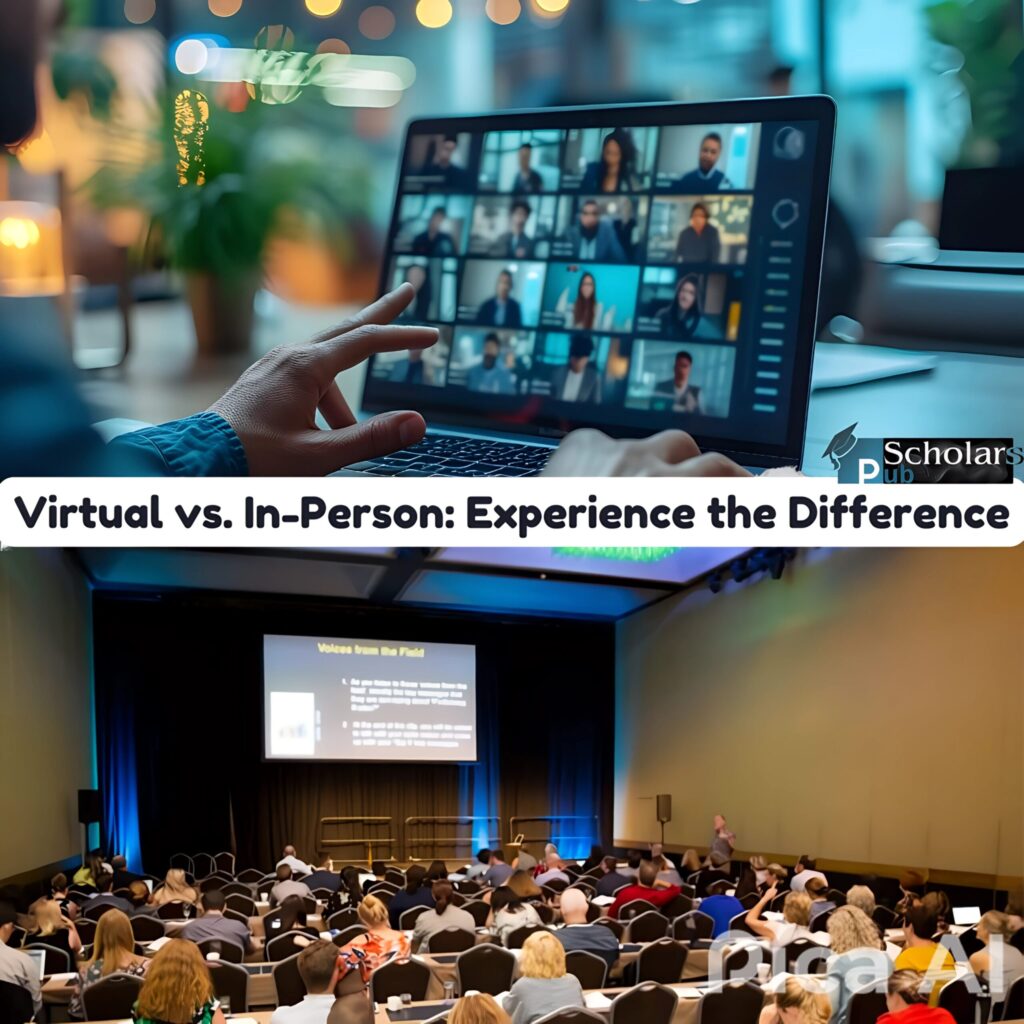
Organizing academic conferences in the year 2026 needs effective solutions for handling paper submissions, reviews, schedules, and the entire experience of the attendees. Selecting the best academic conference management software can make organizing stress-free. In this detailed guide, you will find the best software options, their features, and comparisons specifically designed for researchers, institutions, and societies.
Whether you require basic abstract management or a comprehensive conference management solution, this blog post will assist you in selecting the best software for your conferences.
What Is Academic Conference Management Software?
Academic conference management software is a platform that is specifically designed to meet the requirements of academic conferences. Unlike other event management software, this software is specifically designed for abstract submission and review, speaker communication, session organization, registration of attendees, and post-conference reporting. It is different from other conference management software in the sense that it gives importance to academic tasks like conference paper review and program organization.
These systems are used to replace the use of spreadsheets, emails, and manual organization with a conference management system.
Why Conference Management Software is a Necessity in 2026?
Contemporary academic conferences tend to attract hundreds or thousands of delegates worldwide. Organizations are finding that traditional methods are no longer practical because of the complexity of peer review, hybrid delivery (virtual and physical), and multi-track programming.
The advantages of using a specific conference management software include:
- Reduced time spent on repetitive tasks.
- Increased accuracy of submissions, reviews, and scheduling.
- Improved communication channels for authors, reviewers, and delegates.
- Insights for future planning.
- Improved delegate engagement through integrated interfaces.
Conference management software helps to centralise all these activities in one place, allowing the focus to shift from logistical nightmares to academic content.
Key Features to Look For
Not all conference management software is created equal. When selecting a system for 2026, look for solutions that have the following features:
Abstract & Peer Review Management
Automated processes for abstract submission at conference, assignment, review, scoring, and notification of decisions.
Registration & Payment Handling
Secure attendee registration with flexible ticketing options and payment gateway integration.
Scheduling & Programme Builder
Functionality to build multi-track conference programs, assign time slots to sessions, and avoid scheduling conflicts.
Virtual/Hybrid Capabilities
Integrated solutions for virtual sessions, poster displays, and attendee engagement.
Reporting & Analytics
Data analysis to help improve future conferences, including insights into submissions, attendance, engagement, and financials.
These are critical elements in maximizing efficiency and providing a professional conference experience.
Best Academic Conference Management Software Solutions for 2026
The following are the best-recommended academic conference management software solutions that you may want to look at this year.
Ex Ordo
Ex Ordo is one of the best conference management software solutions specifically designed for academic and research conferences. Users love the integrated interface for abstract submission, peer review process, registration, scheduling, and virtual conference management. It is best suited for handling complex multi-track conferences and a large number of submissions.
Best for: Research organizations, universities, and large symposia
Key strengths: Simple peer review process setup, flexible scheduling, and virtual conference tools
Why choose it: Specialized tools designed specifically for academic purposes
EasyChair
This is one of the oldest and most popular conference management software solutions that efficiently handles abstract submission, peer review, and conference communication. Although its interface is a bit outdated, it is still the best solution for small to mid-sized academic conferences.
Best for: Technical and research conferences with simple processes
Key strengths: Efficient abstract submission and peer review process
Why choose it: It is one of the most established solutions in academia with a huge user base
Microsoft CMT (Conference Management Toolkit)
Microsoft’s CMT is a powerful and secure academic conference management tool developed on Azure. It handles large volume submissions, complex review assignments, and joint decision-making. Its scalability is enterprise-class, making it suitable for large international academic conferences.
Best for: Large international academic conferences
Key features: Scalable architecture, complex review modules
Why choose it: Industry-trusted among large research communities
Fourwaves
Fourwaves is a conference management system specifically developed for scientific and academic meetings. It simplifies poster sessions, abstracts, registration, and scheduling. Fourwaves is best suited for smaller to mid-sized conferences, particularly those emphasizing posters.
Best for: Posters, departmental symposia, graduate research days
Key features: User-friendly interface, suitable for hybrid conferences
Why choose it: Cost-effective for smaller groups
ScholarOne Abstracts
ScholarOne Abstracts is a high-performance conference management system designed for large conferences and professional societies. This solution is best suited for conferences with a large number of submissions.
Best for: Professional associations, multi-track events
Key strengths: Complex workflows on scale
Why choose it: ScholarOne Abstracts is best suited for formal academic conferences with a large number of submissions.
vFairs
While vFairs can be considered a more general event management platform, it has excellent virtual and hybrid functionality, including registration, analytics, networking, and engagement tools. It is best suited for conferences that want to engage their virtual attendees.
Best for: Conference platforms with virtual/hybrid focus
Key strengths: Immersive event experiences, networking
Why choose it: vFairs is best suited for conferences that want to engage their virtual attendees.
COMS – Conference Management System
COMS is a comprehensive system for managing academic conferences, including abstracts, timetables, registration, and publication. It is intended to be a centralized platform for all essential conference activities, which is a modern approach to academic conference organization.
Best suited for: Academic and scientific conferences
Main advantages: Centralized conference management
Why use it: Convenient and easy to use for medium-sized conferences
How to Choose the Right Tool
Choosing the right conference management software requires consideration of the following factors:
Event Size
Global conferences require scalable functionality, while smaller workshops can be managed with simpler software.
Budget
Some software solutions charge per submission or according to a tiered pricing system, while others provide custom enterprise pricing.
Technical Expertise
Select software solutions that align with your team’s comfort level with technology.
Desired Features
If peer review, abstract evaluation, and publication management are your top priorities, look for software solutions that excel in academic functionality.
By balancing these factors, you can identify a conference management system that suits your particular needs.
Future Trends in Conference Management (2026)
In 2026, the trend in academic conference management is to utilize software that combines AI-driven recommendations for reviewer allocation, registration analytics, and mobile-optimized delegate engagement.
The trends that are currently on the rise include:
- AI-supported peer review
- Dynamic scheduling based on attendance patterns
- Mobile event apps
- Integrated Virtual environments
These are assisting conference organizers in providing more personalized and streamlined experiences for delegates, speakers, and sponsors.
Frequently Asked Questions: Academic Conference Management Software
How does academic conference management software differ from other event management software?
The academic software is designed with the needs of academics in mind, such as abstract submission, peer review, and conference proceedings. These are not necessarily included in other event management software. Full conference management software can save academic organizers time.
Can I find free conference management software?
Yes, there are free versions of conference management software, such as OpenConf Community Edition or the basic versions of other software such as EasyChair. These versions may not have all the functionality required for larger conferences.
Are virtual conferences supported in academic conference management software?
Some software now supports virtual and hybrid conferences, which combine online and offline events. There are specialized virtual conference tools such as vFairs and Ex Ordo, which have strong virtual session functionality.
Is the automation of peer review important?
Yes. Automation enhances fairness and efficiency, minimizes manual work, and ensures a seamless process from submission to acceptance.
Do these tools provide attendee engagement functionality?
Yes. modern conference management software typically provides attendee engagement functionalities such as networking directories, feedback tools, Q&A systems, and more.
Final Thoughts
Selecting the best academic conference management software in 2026 is essential for hosting successful academic conferences. The best software will save you time, enhance workflows, and improve the experience for both attendees and organizers.
From powerful software such as Ex Ordo and Microsoft CMT to specialized software such as Fourwaves and ScholarOne Abstracts, you can find the software that suits your academic conference’s size and purpose. Your priority should be peer review automation, usability, hybrid functionality, and reliability.
Organize smarter with the software mentioned above and make your next academic conference a memorable success.

I am a seasoned professional with over 9 years of transformative experience in the domains of molecular biology, immunology, and clinical research. With a career that spans from 2006 to 2018, my journey has been marked by a relentless pursuit of scientific excellence and an unwavering commitment to improving healthcare outcomes through groundbreaking research. I have worked at one of India’s premier medical institutions, AIIMS(All India Institute of Medical Sciences), where I contributed significantly to the fields of molecular biology and clinical research. My expertise in protein analysis and genetic studies allowed me to identify potential biomarkers and improve diagnostic accuracy, contributing to better healthcare outcomes for patients. Notably, the research work has been published in prestigious scientific journals such as the Indian Journal of Ophthalmology and the British Journal of Ophthalmology.
Publication in these esteemed journals reflects my commitment to advancing medical science and sharing insights with the global research community. These publications highlight my expertise in areas ranging from gene polymorphism and immune response mechanisms to the effects of chronic drug therapy, all contributing to the larger body of scientific knowledge. My passion for scientific communication led me to pursue an Executive Diploma in Medical Writing from CliMed Research Solutions and Curio Training and Research Institute (CTRI), India. This certification has further refined my ability to bridge the gap between complex scientific research and its practical applications in healthcare. My passion for content writing drives me to continuously create content that derives engagement ,build trust, and leaves a lasting impression on readers”.