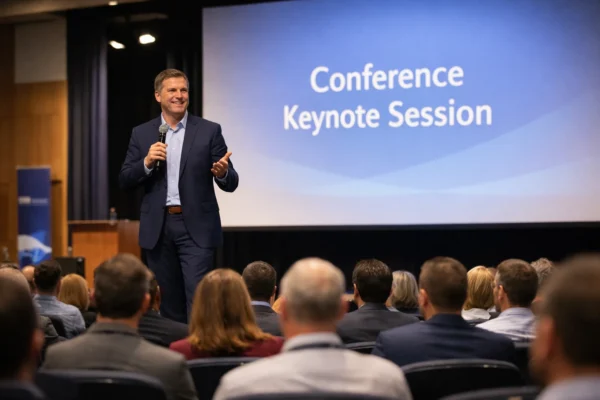
- What Is a Keynote Speaker?
- Role of a Keynote Speaker at a Conference
- 1. Setting the Tone for the Conference
- 2. Offering New Ideas and Perspectives
- 3. Inspiring and Motivating the Audience
- 4. Aligning the Theme of the Conference
- 5. Build Event Credibility
- What Are the Keynote Speaker’s Responsibilities Before the Conference?
- Attend a Planning Briefing
- Create Customized Content
- Personalize the Message
- Organize Logistics
- Rehearse and Improve
- What Should a Keynote Speaker Do on a Conference Stage?
- Capture Attention Immediately
- Keep the Speech Clear and Organized
- Engage the Audience
- Provide Actionable Takeaways
- How Long Is a Keynote Speaker Talk at a Conference?
- What Simple Outline Can a Keynote Speaker Follow?
- How Do I Build a Keynote Slide Deck Template for a Conference?
- Why Conferences Highlight the Keynote Session
- How Is a Keynote Speaker Different From a Regular Talk or Plenary?
- Integrating Keynote Planning Into Your Conference Event Planning Checklist Template
- FAQs About Keynote Speakers
- What is a keynote speaker?
- Why is a keynote speaker important in conference planning?
- When should I book a keynote speaker?
- How do I prepare a conference event planning checklist template for keynote speakers?
- Can a keynote speaker participate in other sessions?
- Conclusion
While planning an event, one of the most common questions that arises is what a keynote speaker is and why this role is so important at a conference. The keynote speaker is more than just another speaker at the conference. This is the individual who gives the keynote address, which helps to establish the tone and theme of the event.
Good conference planning starts with clarity. This clarity is often established through the keynote. Whether you are creating a conference event planning checklist template or planning a large corporate event, it is important to understand the keynote role to create a well-structured event or conference.
Let’s take a closer look at the role of keynote speakers and why they are so important.
What Is a Keynote Speaker?
Before going into the details of the duties, it is important to have a clear understanding of the question: what is a keynote speaker?
A keynote speaker is the main speaker at a conference who delivers the main speech that is relevant to the theme of the conference. The keynote speech is often the opening speech at the conference or at a major session.
Unlike the breakout speakers who concentrate on specific topics, keynote speakers speak on big-picture topics.
Their job involves:
- Introduction to the main theme
- Creating emotional engagement
- Sharing expert knowledge
- Inspiring the audience
- Summoning expectations
In short, a keynote speaker is the one who brings all the elements of the conference together in one theme.
Role of a Keynote Speaker at a Conference
The question of what a keynote speaker is can be answered by understanding the role of a keynote speaker at a conference.
1. Setting the Tone for the Conference
The first Presenting at a conference is usually a keynote speaker. He sets the tone for the conference.The audience moves from networking to serious engagement.
2. Offering New Ideas and Perspectives
A keynote speaker offers new ideas to the audience. These ideas may include:
- Trends in the industry
- Leadership ideas
- Innovation ideas
- Future projections
New ideas promote discussion and learning.
3. Inspiring and Motivating the Audience
Motivation is a key aspect of keynote presentations. The keynote speaker inspires the audience through stories and real-life examples.
Inspiration leads to increased participation in other sessions.
4. Aligning the Theme of the Conference
Every conference has a theme. The keynote speaker explains why the theme is important and how it relates to the audience.
Alignment leads to better conference planning.
5. Build Event Credibility
Having a keynote speaker who is a respected professional in the industry adds credibility to the event. Delegates feel assured that they are spending time on a worthwhile program.
The marketing of events tends to focus on the keynote speaker as a means of encouraging registrations.
What Are the Keynote Speaker’s Responsibilities Before the Conference?
The keynote speaker’s responsibilities begin well before the day of the conference.
Attend a Planning Briefing
The speaker holds a meeting with the organizers to discuss:
- Profile of the audience
- Purpose of the event
- Theme of the conference
- Desired outcomes
Communication is key to relevance.
Create Customized Content
A successful keynote speech reflects the specific audience. . A generic speech is unlikely to produce good results.
This involves research on what is currently happening in the industry and what the audience wants to hear.
Personalize the Message
Personalization leads to greater engagement. Messages that refer to industry or local issues tend to build better connections.
Tailored messages always perform better than generic speeches.
Organize Logistics
Good conference planning involves organizing:
- Travel
- Audio-visual equipment
- Slide preparation
- Session timing
Adding these to your conference event planning checklist template ensures that there are no technical issues.
Rehearse and Improve
Professional keynote speakers rehearse the delivery of their speeches to ensure smooth transitions and good timing.
Rehearsal helps to alleviate nervousness and build stage presence.
What Should a Keynote Speaker Do on a Conference Stage?
Once the speaker is on the conference stage, the focus shifts to speech delivery.
Capture Attention Immediately
A good opening is essential. The use of stories, questions, or surprising facts captures the audience’s attention immediately.
The first few minutes on stage determine audience attention.
Keep the Speech Clear and Organized
A speech is easier to understand when it follows a simple and clear order. A keynote speech should move step by step like this:
- Start with something interesting to grab attention.
- Share the main message in the middle part.
- Give examples or stories to explain your points.
- Highlight the key lessons people should remember.
- End with a strong message that encourages action.
This simple flow helps the audience follow along and remember what was said.
Engage the Audience
Engaging the audience is essential for retention. The keynote speaker can engage the audience through:
- Eye contact
- Humor
- Questions
- Examples
Engagement helps to keep the energy levels high.
Provide Actionable Takeaways
The audience appreciates key takeaways. A keynote speech should provide the audience with ideas they can implement immediately after the speech.
Actionable takeaways add long-term value.
How Long Is a Keynote Speaker Talk at a Conference?
The duration depends on the event type.
- 30 minutes for shorter programs
- 45 minutes for standard sessions
- 60 minutes for large conferences
Attention spans vary, so focused content delivers stronger results than extended speeches.
What Simple Outline Can a Keynote Speaker Follow?
A clear outline improves preparation and delivery.
Sample Keynote Structure:
- Opening story or attention-grabbing fact
- Introduction to conference theme
- Discussion of key industry insight
- Real-life example or case study
- Motivational closing with action steps
This framework keeps the message memorable.
How Do I Build a Keynote Slide Deck Template for a Conference?
Slides should support the message without distracting from it.
Slide Design Tips:
- Use minimal text
- Choose high-quality visuals
- Maintain consistent branding
- Avoid overcrowded slides
- Highlight main takeaways
Clean visuals improve clarity and professionalism.
Why Conferences Highlight the Keynote Session
The keynote session often receives special attention in promotional materials.
Reasons include:
- Increasing ticket sales
- Attracting sponsors
- Building anticipation
- Demonstrating event credibility
In effective conference planning, the keynote functions as the anchor of the program.
How Is a Keynote Speaker Different From a Regular Talk or Plenary?
Many people confuse these roles.
- A keynote speaker defines the central theme.
- A regular speaker presents detailed subject matter.
- A plenary session addresses all attendees but may not shape the overall direction.
The keynote carries symbolic and strategic importance.
Integrating Keynote Planning Into Your Conference Event Planning Checklist Template
To ensure smooth execution, include keynote-related tasks in your checklist.
Key Items to Include:
- Define event theme
- Research potential keynote speakers
- Confirm budget and availability
- Finalize contracts
- Coordinate technical setup
- Schedule rehearsal
- Promote the keynote session in marketing
- Gather post-event feedback
Structured conference planning reduces stress and improves results.
FAQs About Keynote Speakers
What is a keynote speaker?
A keynote speaker is the chief speaker at a conference who launches the theme of the conference.
Why is a keynote speaker important in conference planning?
The keynote speaker helps to align the audience with the purpose of the conference.
When should I book a keynote speaker?
You should book a keynote speaker 6 to 12 months prior to the conference.
How do I prepare a conference event planning checklist template for keynote speakers?
You should prepare a checklist template that includes speaker research, contract agreement, logistics coordination, rehearsal, promotion, and feedback.
Can a keynote speaker participate in other sessions?
Yes. Some keynote speakers also participate in other sessions such as panels or Q&A sessions.
Conclusion
Now that you know what a keynote speaker is, you can see why this position is so important in conference planning. The keynote speaker is what establishes the tone, brings new ideas, inspires the audience, and increases the credibility of the event.
When the keynote speaker is incorporated into your conference planning checklist template, the keynote speech is what the entire event is built upon. With proper planning and execution, the keynote speech will be remembered by all of the attendees.
The keynote speech is more than just the beginning of a conference; it establishes the entire event.

I am a seasoned professional with over 9 years of transformative experience in the domains of molecular biology, immunology, and clinical research. With a career that spans from 2006 to 2018, my journey has been marked by a relentless pursuit of scientific excellence and an unwavering commitment to improving healthcare outcomes through groundbreaking research. I have worked at one of India’s premier medical institutions, AIIMS(All India Institute of Medical Sciences), where I contributed significantly to the fields of molecular biology and clinical research. My expertise in protein analysis and genetic studies allowed me to identify potential biomarkers and improve diagnostic accuracy, contributing to better healthcare outcomes for patients. Notably, the research work has been published in prestigious scientific journals such as the Indian Journal of Ophthalmology and the British Journal of Ophthalmology.
Publication in these esteemed journals reflects my commitment to advancing medical science and sharing insights with the global research community. These publications highlight my expertise in areas ranging from gene polymorphism and immune response mechanisms to the effects of chronic drug therapy, all contributing to the larger body of scientific knowledge. My passion for scientific communication led me to pursue an Executive Diploma in Medical Writing from CliMed Research Solutions and Curio Training and Research Institute (CTRI), India. This certification has further refined my ability to bridge the gap between complex scientific research and its practical applications in healthcare. My passion for content writing drives me to continuously create content that derives engagement ,build trust, and leaves a lasting impression on readers”.