

- 1. HRSA Nurse Corps Scholarship Program
- 2. National Health Service Corps (NHSC) Scholarship
- 3. NURSE Corps Loan Repayment Program
- 4. FAFSA and Federal Pell Grant
- Best Nursing Scholarships for 2026 (By Degree Level)
- LPN / ADN Scholarships
- BSN Scholarships
- MSN / NP Scholarships
- DNP / PhD Scholarships
- Continuing Education Grants
- Conference and Professional Development Funding
- Specialty Certification Grants
- Nursing Scholarships by Specialty
- For racial and ethnic minority nurses
- For nurses from specific backgrounds
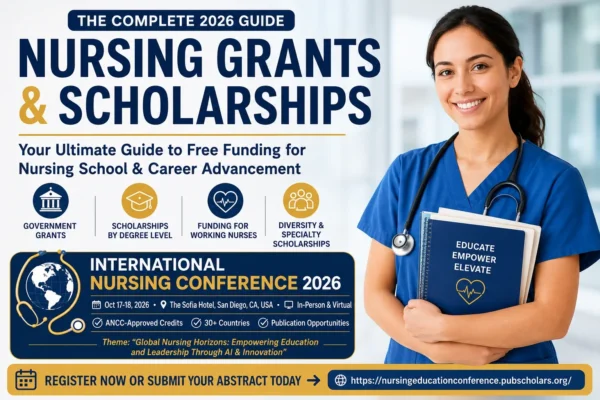
Paying for nursing school — or funding your continuing education as a working nurse — does not have to mean years of student debt. In 2026, thousands of nursing grants and scholarships are available from federal agencies, state governments, hospitals, professional associations, and private foundations. Whether you are starting your LPN, earning your BSN, completing an MSN, or already working as an RN seeking career advancement, this guide covers every major source of free funding available to you.
Before we dive in: there is a critical difference between nursing grants and nursing scholarships. We cover both in detail below — because understanding which type of funding you are applying for changes how you search, qualify, and succeed.
What Is the Difference Between Nursing Grants and Nursing Scholarships?
Many websites use “nursing grants” and “nursing scholarships” interchangeably. They are not the same thing, and knowing the difference helps you find funding that actually fits your situation.
| Aspect | Nursing Grants | Nursing Scholarships |
|---|---|---|
| Repayment | Not required | Not required (gift) |
| Source | Government or institutions | Private orgs, hospitals, associations |
| Who qualifies | Students + working nurses | Primarily students |
| Examples | Nurse Corps, NHSC, HRSA | AACN scholarship, Bold.org grants |
| Service requirement | Often yes (underserved areas) | Rarely |
The key distinction: grants are typically government-funded or institution-funded awards that may require a service commitment (working in an underserved area after graduation). Scholarships are usually private awards with no service strings attached. Both are free money — you do not repay them.
Top US Government Nursing Grants for 2026
Federal nursing grants are the most generous funding available — some cover full tuition. The catch is that most require you to work in health shortage areas or underserved communities after graduation.
1. HRSA Nurse Corps Scholarship Program
- Award: Full tuition + fees + a monthly stipend for living expenses
- Who qualifies: Full-time nursing students at accredited schools
- Service requirement: At least 2 years working at a Critical Shortage Facility (CSF) after graduation
- Deadline: Typically opens March–April each year (check hrsa.gov for 2026 dates)
- How to apply: Through the HRSA Bureau of Health Workforce portal
This is one of the most valuable nursing grants available in the United States. The full-tuition coverage plus monthly living stipend makes it highly competitive. Apply early — slots are limited each cycle.
2. National Health Service Corps (NHSC) Scholarship
- Award: Full tuition + required fees + living stipend
- Who qualifies: Students training for primary care nursing roles (NP track preferred)
- Service requirement: Minimum 2 years at an NHSC-approved site in a Health Professional Shortage Area
- Application: nhsc.hrsa.gov
The NHSC scholarship is particularly strong for nurse practitioners planning to work in rural or underserved urban communities. Many NHSC sites are in underserved areas where nursing professionals are desperately needed — making this a meaningful career choice, not just a financial one.
3. NURSE Corps Loan Repayment Program
- Award: Up to 85% of your outstanding nursing school debt repaid
- Who qualifies: Registered nurses, advanced practice nurses, and nurse faculty who are already employed at a Critical Shortage Facility
- Service requirement: 2-year commitment at the qualifying facility
- Note: This is for working nurses, not students — an often-overlooked source of grant funding
If you are already an RN with student loan debt, this program is one of the most effective ways to reduce your financial burden while serving high-need communities.
4. FAFSA and Federal Pell Grant
- Award: Up to $7,395 per year (2026 amount, need-based)
- Who qualifies: Undergraduate nursing students who demonstrate financial need
- No service requirement
- How to apply: Complete the Free Application for Federal Student Aid (FAFSA) at studentaid.gov
Every nursing student should complete the FAFSA, even if you are unsure of eligibility. Many nurses leave Pell Grant money unclaimed simply because they did not apply. The FAFSA also unlocks state-level grants and institutional scholarships.
Best Nursing Scholarships for 2026 (By Degree Level)
Unlike government grants, these scholarships come from professional associations, hospitals, and private foundations. They are available to nursing students at all levels and are renewable in many cases.
LPN / ADN Scholarships
- AACN AfterCollege Scholarship — open to nursing students at any accredited school, including ADN programs. Award: $2,500
- NursingExams.org Scholarship — available to students enrolled in LPN or ADN programs. Award: $1,000
- State nursing board scholarships — most US states have LPN-specific funding through their State Board of Nursing; check your state’s official nursing board website
BSN Scholarships
- Johnson Foundation Nursing Scholarships — multiple awards for BSN students at accredited 4-year programs
- American Association of Colleges of Nursing (AACN) Scholarship Program — one of the most respected BSN scholarships in the country
- Hospital-sponsored scholarships — many large health systems (HCA Healthcare, Kaiser Permanente, Mayo Clinic) offer full or partial BSN scholarships in exchange for post-graduation employment commitments
MSN / NP Scholarships
- AACN Graduate Nursing Scholarship — specifically for students pursuing advanced practice degrees
- American Association of Nurse Practitioners (AANP) Foundation Grants — open to NP students; multiple award categories
- Specialty nursing association scholarships — if you are specializing (oncology, pediatrics, ICU), the relevant professional association likely has its own scholarship program
DNP / PhD Scholarships
- HRSA Faculty Loan Repayment Program — for nurses who join accredited nursing faculty after completing doctoral studies
- Jonas Nursing & Veterans Healthcare Scholars Program — doctoral fellowships with nursing leadership mentoring
- Sigma Theta Tau International Research Grants — for doctoral nursing research projects
Nursing Grants for Working Nurses (Not Just Students)
This is the section that most nursing grant guides leave out entirely. If you are already a licensed RN, LPN, or NP, there is significant funding available specifically for you — for continuing Nursing education, specialty certification, conference attendance, and career advancement.
Continuing Education Grants
- Many state nursing associations offer CE grants of $500–$2,000 to active nurses seeking additional credentials or specialty training
- The American Nurses Foundation (ANF) offers annual research grants and practice grants to working nurses
- Hospital and health system employers often have tuition reimbursement programs for nurses pursuing further education — always check your HR department
Conference and Professional Development Funding
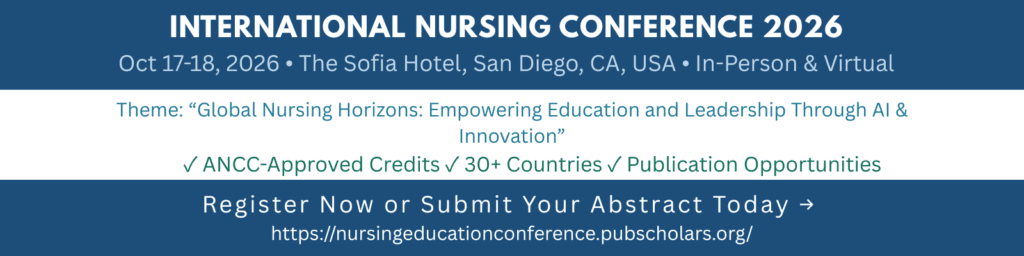
- ANCC-accredited nursing conferences — such as the International Nursing Conference 2026 (May 23–24, San Diego) — qualify for CE credit funding from many employers
- Some nursing associations offer travel grants or registration fee subsidies for members attending qualifying conferences
- Check whether your state nursing association or hospital system has a “professional development fund” specifically for conference attendance
Pro tip: If your employer has a professional development budget, attending an ANCC-accredited conference like the PubScholars Nursing Conference counts as qualifying continuing education. Submit a reimbursement request using the conference’s official ANCC documentation.
Specialty Certification Grants
- ANCC Certification Renewal Grants — ANCC offers financial assistance for nurses renewing specialty certifications
- Many specialty nursing organizations (Oncology Nursing Society, American Association of Critical-Care Nurses) have their own certification support grants for members
Nursing Scholarships by Specialty
If you are pursuing a specific nursing specialty, there are targeted scholarships beyond general nursing awards that most applicants never find.
- Pediatric nursing: The National Association of Pediatric Nurse Practitioners (NAPNAP) Foundation offers multiple scholarship categories for pediatric NP students
- Oncology nursing: Oncology Nursing Society (ONS) Foundation scholarships — multiple awards from $1,000 to $5,000 for oncology nursing students and practicing nurses
- Critical care / ICU: American Association of Critical-Care Nurses (AACN) Educational Advancement Scholarships — awarded to RNs pursuing BSN, MSN, or doctoral degrees with a focus on acute care
- Psychiatric / mental health nursing: American Psychiatric Nurses Association (APNA) Foundation Grants for mental health nursing students and practitioners
- Midwifery and women’s health: American College of Nurse-Midwives (ACNM) Foundation scholarships for CNM students
- Travel nursing: Several travel nursing agencies (AMN Healthcare, Cross Country Nurses) offer education assistance grants to nurses on contract assignments
Nursing Scholarships for Minorities and Underrepresented Groups
Nursing diversity scholarships are among the most generously funded in the field, reflecting the healthcare system’s urgent need for a workforce that mirrors its patient population.
For racial and ethnic minority nurses
- National Black Nurses Association (NBNA) Scholarship — open to Black nursing students at all levels
- National Hispanic Nurses Association (NHNA) Scholarship Program
- Asian American/Pacific Islander Nurses Association (AAPINA) Scholarships
- American Indian Nurse Scholarship Award Program (AINSAP) — funded through the Indian Health Service
- CVS Health Foundation Healthcare Careers Scholarship — up to $20,000 for minority nursing students
For nurses from specific backgrounds
- ExceptionalNurse.com Scholarships — specifically for nursing students with disabilities
- Military-connected nurses: Nurse Corps, Army Nurse Corps Association, and ROTC programs offer full-ride equivalents for nurses willing to serve
- First-generation college students: Many nursing schools and state programs have dedicated first-gen grants that nursing students often overlook
How to Apply for Nursing Grants: Step-by-Step
Understanding how to find and apply for nursing grants is as important as knowing which ones exist. Here is a straightforward process:
- Complete your FAFSA first. This unlocks federal grants, state grants, and institutional aid simultaneously. Do this before any other application.
- Check your state nursing association. Every US state has a nursing association with its own grant and scholarship programs. Search: “[your state] nursing association scholarship.”
- Apply to your nursing school’s financial aid office directly. Many schools have internal grants that are never listed publicly and go unclaimed each year.
- Target specialty-specific grants early. These are less competitive than general nursing scholarships because fewer applicants are aware of them.
- Apply to multiple grants simultaneously. Most nursing grants allow concurrent applications. Apply to 5–10 simultaneously for the best results.
- Track your deadlines in a calendar. Many grants open in September–November for the following academic year. Missing the deadline by one day disqualifies you entirely.
Frequently Asked Questions About Nursing Grants
Yes. The HRSA Nurse Corps Scholarship and NHSC Scholarship both cover full tuition for students entering nursing programs. The Pell Grant is also available to eligible undergraduate nursing students. These are true grants — not loans — and do not require repayment as long as you meet the service commitment.
Absolutely. The NURSE Corps Loan Repayment Program pays off up to 85% of existing nursing school debt for RNs working at qualifying facilities. Many state nursing associations and hospital systems also offer continuing education grants, certification grants, and professional development funding for nurses already in practice.
The most significant grants currently available include: HRSA Nurse Corps Scholarship (full tuition), NHSC Scholarship (full tuition), Federal Pell Grant (up to $7,395/year), and various state-level nursing workforce grants. Deadlines vary — check hrsa.gov and your state nursing board for current cycle dates.
Yes, through the HRSA Nurse Corps Scholarship and NHSC Scholarship programs, which cover full tuition, fees, and living expenses. Hospital-sponsored scholarships (offered by large health systems) also sometimes cover full tuition in exchange for a post-graduation employment commitment.
True grants do not require repayment. However, some — particularly government grants like Nurse Corps and NHSC — require you to fulfil a service commitment (working in an underserved area). If you do not complete the service commitment, you may be required to repay the grant with interest. Always read the terms carefully before accepting.
If you attend an ANCC-accredited nursing conference, your employer’s continuing education or professional development budget may cover registration and travel costs. Many state nursing associations also have small travel grants for member nurses attending qualifying events. The International Nursing Conference 2026 (May 23–24, San Diego) is ANCC-accredited — making it eligible for employer CE reimbursement programs.
Final thought: The most important thing about nursing grants and scholarships is simply applying. Thousands of nurses leave free funding unclaimed every year because they assume they will not qualify, miss the deadline, or do not know where to look. Use this guide as your starting point, bookmark the key application portals, and set calendar reminders for upcoming deadlines. Your career in nursing is worth every application you submit.

I am a seasoned professional with over 9 years of transformative experience in the domains of molecular biology, immunology, and clinical research. With a career that spans from 2006 to 2018, my journey has been marked by a relentless pursuit of scientific excellence and an unwavering commitment to improving healthcare outcomes through groundbreaking research. I have worked at one of India’s premier medical institutions, AIIMS(All India Institute of Medical Sciences), where I contributed significantly to the fields of molecular biology and clinical research. My expertise in protein analysis and genetic studies allowed me to identify potential biomarkers and improve diagnostic accuracy, contributing to better healthcare outcomes for patients. Notably, the research work has been published in prestigious scientific journals such as the Indian Journal of Ophthalmology and the British Journal of Ophthalmology.
Publication in these esteemed journals reflects my commitment to advancing medical science and sharing insights with the global research community. These publications highlight my expertise in areas ranging from gene polymorphism and immune response mechanisms to the effects of chronic drug therapy, all contributing to the larger body of scientific knowledge. My passion for scientific communication led me to pursue an Executive Diploma in Medical Writing from CliMed Research Solutions and Curio Training and Research Institute (CTRI), India. This certification has further refined my ability to bridge the gap between complex scientific research and its practical applications in healthcare. My passion for content writing drives me to continuously create content that derives engagement ,build trust, and leaves a lasting impression on readers”.