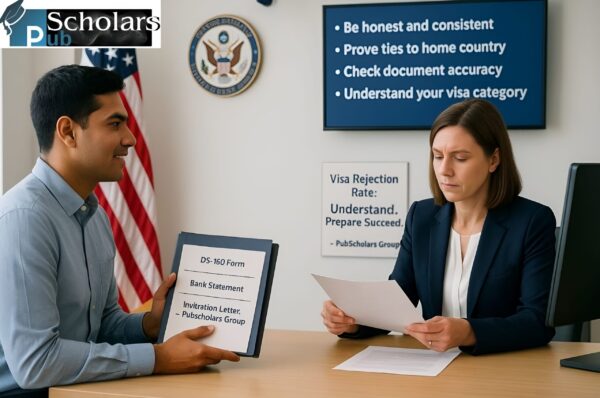
- Why is the visa rejection rate high for US visas?
- Here are some of the most common reasons why the visa rejection rate remains more:
- 1.Incomplete or incorrect application form
- 2. Weak financial documents
- 3. Poor interview performance
- 4. Lack of relations for the country
- 5. Wrong visa category selection
- Documents Causing Visa Rejection
- Understanding the Tourist Visa Rejection Rate USA
- Travel history and visa approval
- How to prove you will return home
- What to do if your visa is denied
- How to reduce your visa rejection risk
- FAQs About Visa Rejection Rate
- 1.What is a visa rejection rate for US?
- 2. What is Section 214 (B)?
- 3. Which documents are often responsible for rejection?
- 4. Why is tourist visa rejection rate USA so high?
- 5. Can I apply again after rejection?
- Yes, but only after fixing issues in your previous application. Re -applying without changes usually leads to the same result.
- 6. What helps a conference in visa approval?
- 7. Does minor application errors lead to rejection?
- 8. Is having family in the US a problem?
- Final Thoughts
The US visa rejection rate has been high in recent years, which has increased concerns between applicants around the world. Whether you are planning to study, work, attend a conference, or visit a family, getting a US visa approved requires serious preparation, complete documentation and a strong personal profile.
Many applicants are surprised when their visas are denied – even after submitting the required forms and documents. In this blog, the PUBSCHOLAR Group explains the reasons behind the high visa refusal rates, due to common document visa rejection, why the tourist visa rejection rate USA remains important, and what steps can the applicants take to avoid rejection.
Why is the visa rejection rate high for US visas?
The United States implements strict immigration law and screening measures. Visa officer in American embassies and consulates around the world carefully examined each application to ensure that the person is requested for the type of visa. They also assess whether the applicants will return to their country after living in America.
Here are some of the most common reasons why the visa rejection rate remains more:
1.Incomplete or incorrect application form
Missing Information, spelling errors, or contradictions as your application are some of the most common causes of visa refusal. If your answers are incomplete or incompatible, it raises doubts about your intentions. What to do: Always carefully review your DS-160 or relevant visa form. Double-check spelling, number, passport details and travel dates.
2. Weak financial documents
Visa officials should be convinced that you have enough money to cover your stay, return and journey. If your bank statement shows low balance, irregular deposit, or if your financial sponsor documents are not clear, your visa may be rejected.
Tip: Submit a consistent and updated financial evidence. If you are attending a conference through the pubscolar group, then include official invitation letters and sponsorship details, if applicable.
3. Poor interview performance
Even a strong application can be denied if your visa interview does not go well. Officers evaluate your faith, clarity and stability with your documents.
General issues:
• Contradicting your own paperwork.
• unclear explanation of travel plans.
• Nervous or dishonest answer.
Tip: Practice your answers in advance. Stay calm, be honest, and make sure your spoken answers match your documents.
4. Lack of relations for the country
One of the major reasons for the visa refusal is that the applicant cannot return after entering the US. You have to show proof of the responsibilities or relationships going on in your country.
Assistant Documents:
• Job appointment letter or business ownership letter
• Family obligations like children or elderly parents
• Property ownership or rental agreements
5. Wrong visa category selection
The risk of your refusal to select the wrong type of visa increases. For example, using a tourist visa (B2) to attend a professional seminar can lead to rejection.
Tip: know your right visa type. For conferences, the PUBSCHOLAR group offers the attendees with customized invitation letters with the appropriate visa category.
Documents Causing Visa Rejection
Even a small error in your paperwork can affect your application. Below are examples of documents causing visa rejection:
Document Type | Reason for Rejection |
|---|---|
Application Form | Errors, incomplete answers, mismatched details |
Passport | Expired, damaged, or less than 6 months validity |
Financial Statements | Unexplained deposits, low balance, fake documents |
Employment Letters | No official stamp, unsigned, or missing leave approval |
Invitation Letters | Vague, unverified, or incorrect |
Travel Itinerary | No flight/hotel proof or inconsistent dates |
Visa Photo | Incorrect size, blurry, or outdated |
Tip: Submit clean, original documents. Provide accurate and event-specific documents to help reduce confusion.
Understanding the Tourist Visa Rejection Rate USA
Between all types, tourist visa rejection rate USA remains one of the highest. This is because many applicants fail to prove their purpose of travel or do not show a strong reason to return to their home country.
However, tourist visa is not just a category to face challenges. Students, work, business and exchange visas also face high rejection rates due to documentation gaps or vague travel intentions
Travel history and visa approval
Your previous travel history also affects your visa approval opportunities. Officials investigate whether you have travelled responsibly and have returned from other countries on time.
• Positive Indicators: Travel to developed nations, timely returns, valid visas
• Negative indicators: overstays, visa violations, deportations
Tip: If you are applying for the first time, make sure that your document and travel objectives are clear.
How to prove you will return home
Demonstrating strong relationships for your country can improve the possibility of obtaining visas. It also includes:
• Having a stable job or running a business
• Being enrolled in ongoing education
• Owning property or managing assets
• Family responsibilities like dependent children or parents
Note: PUBSCHOLAR GROP also supports applicants by offering documents that align with short -term visits, ensuring clarity in the mind of the visa officer.
What to do if your visa is denied
The visa is difficult to deny, but this doesn’t mean that you can never apply again. Understanding why you were denied is the first step.
To take steps:
1. Review the reason mentioned (usually under Section 214 (B))
2. Gather strong supporting documents.
3. Fix discrepancies in your application or story.
4. Wait and apply again with improvement.
Tip: If you have been refused while applying for a pubscholars group-supported conference, contact us to refine your documents and help improve your visa profile.
How to reduce your visa rejection risk
To reduce your visa rejection rate, follow these guidelines:
- Choose the right visa category
- Check your application and passport information again
- Present clear, true financial and employment details
- Prove a strong relationship for your country
- Prepare confidence for interview
- Use official, verification of invitation letters
- Avoid fake or changed documents at any costs. Each of these action creates confidence with a consular officer and strengthens your profile.
FAQs About Visa Rejection Rate
1.What is a visa rejection rate for US?
It varies from the country and visa types, but US has one of the highest visa rejection rates globally. Common reasons include incomplete documents, weak financial and vague intentions.
2. What is Section 214 (B)?
This refers to a legal section where the officer believes that the applicant has not demonstrated a strong relationship or real intentions of travel.
3. Which documents are often responsible for rejection?
Common documents due to visa rejection include incomplete financial evidence, fake employment letters, vague invitations and old passport photos.
4. Why is tourist visa rejection rate USA so high?
Because many applicants fail to prove their intention of return or submit a vague travel plan. For the first time, passengers are specially examined.
5. Can I apply again after rejection?
Yes, but only after fixing issues in your previous application. Re -applying without changes usually leads to the same result.
6. What helps a conference in visa approval?
Yes, especially if it is hosted by a reliable organization like Pubsholar Group. A valid invitation letter showing date, purpose and support improves your opportunities.
7. Does minor application errors lead to rejection?
Yes, small mistakes -like wrong passport number or incompatible dates – can increase doubt.
8. Is having family in the US a problem?
Not necessarily, but if the officer feels that you can try to immigrant permanently, it may be denied.
Final Thoughts
Visa rejection rate for the United States is a serious concern for applicants worldwide. Whether you are applying for a tourist visa, student visa, work permit, or business trip, it is important to understand what leads to rejection and how to avoid it.
From incomplete forms to weak finance status and unclear interviews, many applicants unknowingly reduce their opportunities. But with proper preparation and strong, proper documents, success is within reach.
Organizations such as the PUBSCHOLAR GROUP play an important role in supporting the applicants by offering an event-based invitations, personal support and guidance on how to strengthen their file.
Knowing why tourist visas rejected in the USA and avoiding mistakes in your documents can really help you get your visa. Always be honest, give correct information, and feel confident when you apply. A good visa application begins with proper planning.


