- Why Journal Selection Is a Strategic Decision
- Step 1: Define Your Paper’s Identity Before Searching
- Step 2: Identify Candidate Journals
- Step 3: Evaluate Scope Fit — The Most Critical Factor
- Step 4: Assess Impact Factor and Quartile in Context
- Step 5: Consider Your Target Audience
- Step 6: Check Open Access and Funder Requirements
- Step 7: Assess Practical Factors
- Step 8: Screen for Predatory Journals
- Step 9: Build Your Submission Waterfall
- Journal Finder Tools: A Detailed Comparison
- Reading a Journal’s Recent Issues: The Most Reliable Scope Check
- Submission Cascade Systems: Using Them Efficiently
- Frequently Asked Questions
- How do I find the right journal for my paper quickly?
- Should I always target the highest possible impact factor?
- Can I contact an editor before submitting to ask if my paper is suitable?
- How do I know if a journal is predatory?
- How do I know if a journal’s scope fits my paper?
- What if my top choice journal has a very long review cycle?
- Is it rude to contact an editor before submitting?
- Useful guides for researchers preparing to submit
- Conclusion
Choosing the right journal is one of the most important and most underestimated decisions in academic publishing. Submit to a journal that is too prestigious and you face near-certain desk rejection after months of waiting. Submit to one with the wrong scope and your paper will confuse both editors and reviewers. Submit to a predatory journal and your work may end up invisible, uncitable, and potentially damaging to your reputation.
This guide provides a systematic, step-by-step framework for finding the best-fit journal before you write your cover letter — saving you months of wasted submission cycles.
Why Journal Selection Is a Strategic Decision
The journal you choose determines:
- Who reads your paper — which directly determines how many relevant citations it receives
- How quickly it gets reviewed — affecting your career timeline
- Whether it meets funder requirements — open-access mandates are now common
- How your publication record looks to evaluators — quartile and IF matter for tenure and grants
- How much it costs — open-access APCs vary enormously
Most researchers select journals reactively, using vague familiarity or a simple IF comparison. A structured selection process produces better outcomes and fewer wasted submission cycles.
Step 1: Define Your Paper’s Identity Before Searching
Before searching for journals, be precise about what your paper is and who it is for.
Key questions:
- What is the single most important finding or contribution?
- Which discipline and subdiscipline does this paper primarily belong to?
- Who is the primary intended reader — basic scientists, clinicians, engineers, policymakers?
- Is this primarily a methods paper, a conceptual contribution, empirical data, or a review?
- Is the contribution incremental or potentially field-changing?
Your answers directly determine which journal types to prioritise. A methods paper for molecular biologists belongs in a different journal than a clinical trial for oncologists, even if both are high quality.
Step 2: Identify Candidate Journals
Start with journals you already know and read regularly — these are the journals where your target readers already go for new research
Then expand your list using:
Automated journal finders:
- JANE (Journal/Author Name Estimator) at jane.biosemantics.org — paste your abstract for ranked journal suggestions based on PubMed literature
- Elsevier Journal Finder — suggestions for Elsevier journals
- Springer Journal Suggester — Springer Nature portfolio
- Wiley Journal Finder
Citation analysis:
- Look at the reference lists in your own manuscript — where were your most important cited papers published? Those journals reach the audience most likely to find your work relevant
- Search your topic in Web of Science or Scopus and filter by journal to see which publications dominate your area
Colleague knowledge:
- Ask senior colleagues and your supervisor which journals they would target for this work
- Researcher experience with specific journals’ turnaround times, reviewer quality, and editorial culture is invaluable
Build a shortlist of 5–8 candidate journals, ranked tentatively before detailed evaluation.
Step 3: Evaluate Scope Fit — The Most Critical Factor
Scope mismatch is the single most common cause of desk rejection. An editor who reads the first paragraph of your abstract and cannot see why it belongs in their journal will reject it within seconds.
How to assess scope fit properly:
- Read the journal’s Aims and Scope page in full — not just a summary
- Browse the last 12 months of published articles — does your paper belong alongside these?
- Check whether the journal publishes your paper type (some journals explicitly exclude certain designs: case reports, meta-analyses, negative results)
- Look for explicit exclusion statements — many journals list what they do not publish
If you cannot find 5–10 recently published papers in the journal that are closely related to yours in both topic and methodology, the scope fit is likely poor. Move to the next candidate.
Scope mismatch is also the reason many researchers confuse the right publication route entirely — submitting work that would suit a conference proceedings venue to a journal, or vice versa. Our comparison of conference papers vs journal papers explains how scope, peer review depth, and citation weight differ between the two routes — useful context before you finalise your shortlist.
Step 4: Assess Impact Factor and Quartile in Context
Once you have a scope-appropriate shortlist, assess quality using field-relative metrics:
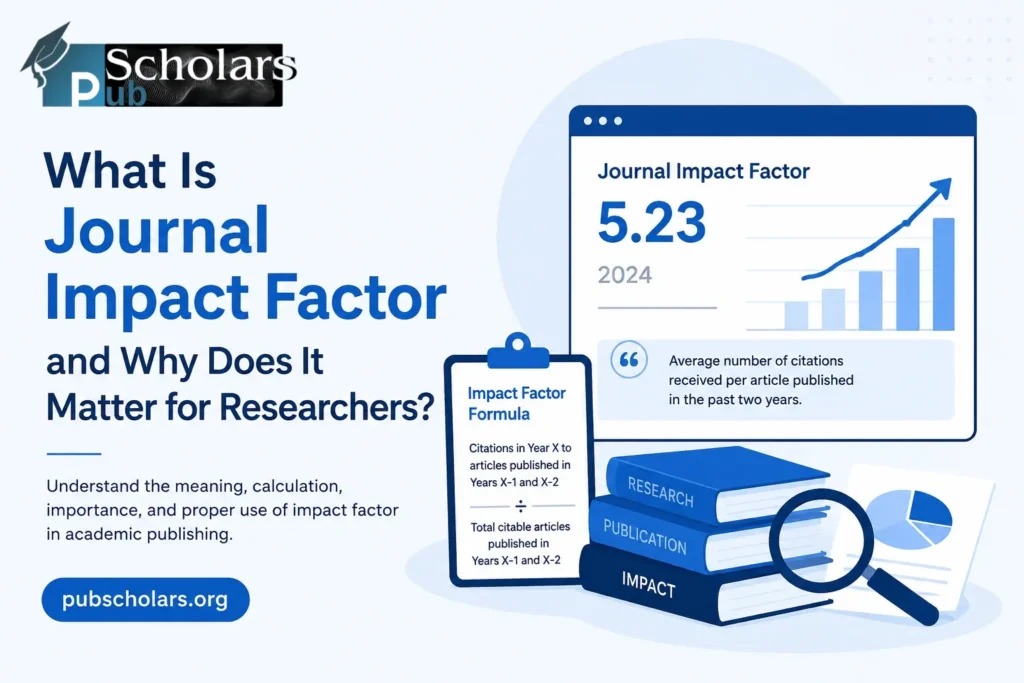
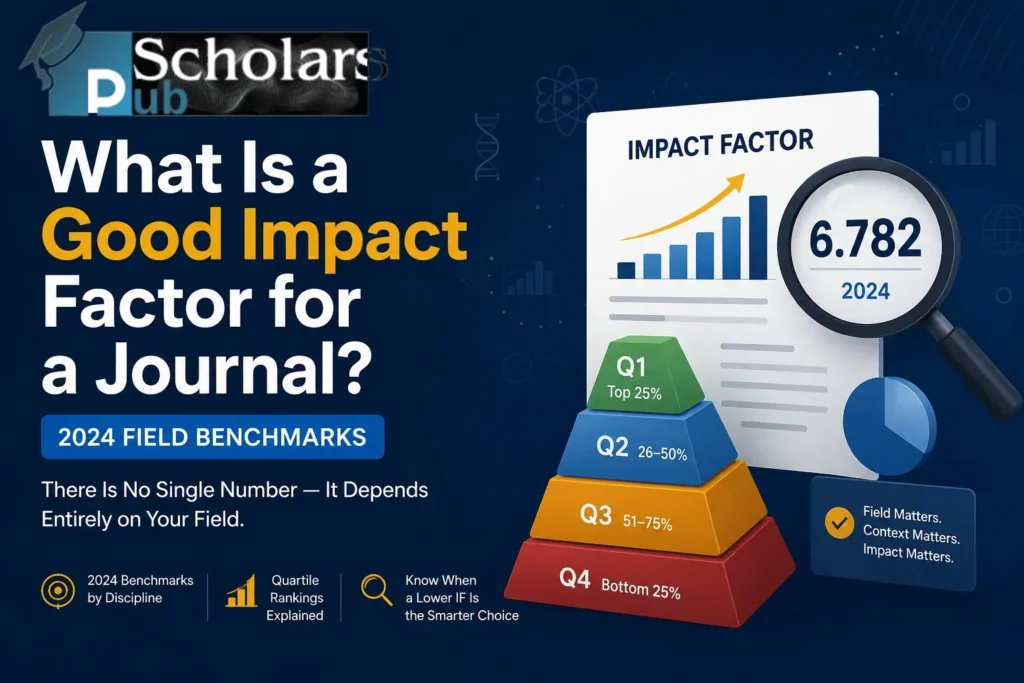
Impact factor (JCR): Check via your institution’s JCR access or the journal’s own website. Compare within the subject category, not across fields.
Quartile ranking (JCR or SCImago): Q1 (top 25%) is the standard target for strong work. Q2 is solid. Check at scimago.org for free.
CiteScore (Scopus): A useful free supplement, particularly for journals not indexed in JCR or in fields where Scopus coverage is stronger.
Setting a Realistic Target
Match your paper’s significance honestly to the journal tier. It can help to first see where the absolute ceiling sits — our list of which journals have the highest impact factor across medicine, biology, and other fields gives useful reference points, even though very few papers genuinely belong in that tier.
| Paper type | Appropriate tier |
|---|---|
| Field-transforming finding with broad implications | Q1 flagship or high-IF generalist |
| Strong, original contribution with field-level significance | Q1 specialist journal in your field |
| Solid, well-executed study with incremental contribution | Q1–Q2 specialist journal |
| Methods paper, replication study, negative result | Q2–Q3 journal that explicitly welcomes these types |
| Case report or small pilot study | Appropriate specialist journal regardless of IF |
Step 5: Consider Your Target Audience
The right journal places your paper in front of the readers who will most benefit from it — and who are most likely to cite it.
Ask:
- Do practitioners in my field read this journal, or only academic researchers?
- Is this journal’s readership primarily national or international?
- Does this journal reach the institutions, hospitals, or agencies whose work relates to mine?
- Is there a community of researchers likely to build on my findings who read this journal?
A paper about a clinical diagnostic tool published in a basic science journal will be read by the wrong people and cited less than the same paper in a clinical journal read by the diagnosticians who will actually use it.
Step 6: Check Open Access and Funder Requirements
Check your grant conditions first. If your research was publicly funded, you may be legally required to publish open access. Failure to comply can result in funder sanctions.
Major mandates include:
- Plan S (European funders including ERC, Wellcome Trust): immediate OA with CC BY licence required
- NIH (USA): deposit in PubMed Central required within 12 months (moving toward immediate OA)
- UKRI: immediate OA required for all funded research
If OA is required, identify journals that offer:
- Full open-access publishing with CC BY licence
- APCs within your funder-provided budget
- APC waivers if you are from a low- or middle-income country
If OA is not mandated, traditional subscription publishing remains an option, though green OA (self-archiving an accepted manuscript) is typically permitted and free.
Step 7: Assess Practical Factors
Turnaround time: Check the journal’s published statistics on time to first decision. SciRev (scirev.org) provides researcher-contributed turnaround data for specific journals — often more accurate than official statistics. If you are near a thesis deadline, job market cycle, or funding application, this matters significantly.
Article processing charges: APCs for OA vary from zero (diamond OA journals) to over $10,000 (some Nature Portfolio journals). Confirm your funding covers this before committing.
Manuscript length limits: Some journals have strict word limits that require significant cutting of your manuscript. Check before writing your submission version.
Language requirements: Most top international journals require English. Some regional journals also publish in other languages.
Step 8: Screen for Predatory Journals
Not every journal that accepts your submission is a legitimate publication venue. Predatory journals charge APCs without providing genuine peer review or editorial standards. Publishing in one can permanently damage your reputation and make your work essentially invisible.
Red flags:
- Unsolicited email invitation to submit with pressure tactics
- Implausibly fast acceptance (days rather than weeks)
- No verifiable editorial board or contact information
- Not indexed in PubMed, Web of Science, or Scopus
- Claimed impact factor from an unofficial source (not JCR)
- Very broad or vague scope covering all of science
Verification tools:
- Think. Check. Submit. (thinkchecksubmit.org) — a free structured checklist
- Web of Science Master Journal List (mjl.clarivate.com) — confirms WoS indexing
- Scopus source list — confirms Scopus indexing
If a journal is not indexed in at least one major database, investigate thoroughly before submitting.
Step 9: Build Your Submission Waterfall
Before submitting anywhere, create a ranked list of target journals:
- Aspirational: Highest-IF journal for which your paper has genuine merit (accept lower probability as the cost of attempting the best)
- Primary target: Best-fit Q1 specialist journal — most likely acceptance and most relevant audience
- Strong fallback: Well-matched Q2 journal with excellent scope fit
- Safety: Q2–Q3 journal where acceptance is reasonably certain given your paper’s quality
If rejected at level 1, revise based on any feedback received and move to level 2. This eliminates the common trap of endlessly resubmitting to unsuitable journals or of underambition from the start.
Journal Finder Tools: A Detailed Comparison
Several automated tools help researchers identify candidate journals. Here is a practical comparison:
Tool Best for Coverage Cost Basis
JANE (jane.biosemantics.org) Biomedical, life sciences PubMed-indexed journals Free Abstract matching to PubMed literature
Elsevier Journal Finder Elsevier portfolio journals Elsevier only Free Abstract matching within Elsevier
Springer Journal Suggester Springer/Nature portfolio Springer Nature only Free Title and abstract matching
Wiley Journal Finder Wiley portfolio journals Wiley only Free Abstract matching
Edanz Journal Selector All fields Broad coverage Free (basic) Multi-publisher matching
Scopus Source List + filters All indexed fields ~27,000 journals Institutional Field + metric filtering
Best practice: Use JANE or Edanz first for an unbiased multi-publisher suggestion, then validate your shortlist using scimago.org for metrics and the journal’s own scope page for fit.
Reading a Journal’s Recent Issues: The Most Reliable Scope Check
No journal finder, however sophisticated, replaces actually reading the journal’s recent content. For every serious candidate journal, spend 20–30 minutes browsing the last 6–12 months of published papers. Ask:
- Are the research questions similar in type and specificity to mine?
- Are the study designs comparable to what I have used?
- Is the level of contribution — incremental advancement vs transformative finding — similar to what my paper represents?
- Do the discussion sections engage with the same literature I engage with?
- Are there papers by researchers I cite, or that cite the same key references I do?
If yes to most of these: strong scope fit. If you cannot find 5–8 recent papers that your work clearly belongs alongside, the scope fit is probably weaker than it appears from the journal’s stated aims and scope.
Submission Cascade Systems: Using Them Efficiently
Many major publishers now offer cascaded submission systems that transfer your manuscript and any reviewer reports to a sister journal when the original journal declines. This saves both time and the effort of reformatting your submission.
Well-known cascade systems:
- Nature Portfolio: Rejected from Nature → can cascade to Nature Communications, Communications Biology, Scientific Reports
- Lancet Group: Rejected from The Lancet → cascades available to eClinicalMedicine, Lancet Regional Health
- PLOS: Rejected from PLOS Biology → cascades to PLOS ONE
- Cell Press: Rejected from Cell → cascades available to Cell Reports, iScience, Heliyon
When a cascade is offered, evaluate carefully: the sister journal’s scope, IF, and quartile may be appropriate for your paper. Accept the cascade if the journal fits; decline if a better-matched journal outside the same publisher’s portfolio would serve your paper better.
Frequently Asked Questions
How do I find the right journal for my paper quickly?
Start with JANE (jane.biosemantics.org) — paste your abstract to get ranked journal suggestions. Then check the top 3–5 suggestions against scimago.org for quartile rankings and scope fit. This takes under 10 minutes and gives you a reasonable starting shortlist.
Should I always target the highest possible impact factor?
No. The highest appropriate IF is a better target than the highest possible IF. A perfectly matched Q1 specialist journal will reach more relevant readers and generate more relevant citations than a high-IF generalist journal where your work is peripheral to most readers’ interests.
Can I contact an editor before submitting to ask if my paper is suitable?
Many journals accept pre-submission enquiries. Check the journal’s author guidelines — some explicitly invite these, others discourage them. A well-written pre-submission enquiry can save months of wasted time if the editor’s response confirms your paper is not within scope.
How do I know if a journal is predatory?
Use the Think. Check. Submit. checklist at thinkchecksubmit.org. Verify that the journal is indexed in a major database at mjl.clarivate.com or scopus.com. Be especially suspicious of unsolicited email invitations and unusually fast acceptance offers.
How do I know if a journal’s scope fits my paper?
Browse the last 12 months of published articles. If you cannot find 5–8 papers that your work clearly belongs alongside in topic, methodology, and contribution level, the scope fit is likely poor. Scope fit is ultimately a judgment call, but reading recent issues is far more reliable than reading the journal’s stated aims and scope alone.
What if my top choice journal has a very long review cycle?
Check SciRev (scirev.org) for researcher-reported turnaround data. If the actual review cycle is much longer than the journal states — common for prestigious journals — factor this into your decision, particularly if you have career milestones approaching.
Is it rude to contact an editor before submitting?
No — pre-submission enquiries are welcomed by many journals. Check the author guidelines: some journals explicitly invite them, others do not. A concise (one-page) pre-submission enquiry with your abstract can save months of wasted time if the editor confirms the paper is not within scope.
Useful guides for researchers preparing to submit
These PubScholars resources cover the full journal selection and submission process:
- How to publish a research paper — the complete step-by-step guide from manuscript prep to post-publication promotion
- What is a good impact factor for a journal? — field-by-field IF benchmarks for medicine, biology, chemistry, physics, and social sciences
- How is journal impact factor calculated? — the official formula, citation windows, and worked examples
- Impact factor vs CiteScore: which matters more? — how the two metrics differ and when to use each
- Does impact factor affect manuscript acceptance chances? — what IF signals about desk rejection rates and submission strategy
Conclusion
Journal selection deserves as much strategic thought as any section of your manuscript. Scope fit is the most critical factor — a mismatch is the single most common cause of wasted submission cycles. Build a ranked shortlist, check both quality metrics and practical factors, verify legitimacy, and prepare your submission waterfall before you send your first cover letter. The right journal for your paper exists — finding it systematically is faster and less frustrating than the trial-and-error approach that most researchers use by default.

I am a seasoned professional with over 9 years of transformative experience in the domains of molecular biology, immunology, and clinical research. With a career that spans from 2006 to 2018, my journey has been marked by a relentless pursuit of scientific excellence and an unwavering commitment to improving healthcare outcomes through groundbreaking research. I have worked at one of India’s premier medical institutions, AIIMS(All India Institute of Medical Sciences), where I contributed significantly to the fields of molecular biology and clinical research. My expertise in protein analysis and genetic studies allowed me to identify potential biomarkers and improve diagnostic accuracy, contributing to better healthcare outcomes for patients. Notably, the research work has been published in prestigious scientific journals such as the Indian Journal of Ophthalmology and the British Journal of Ophthalmology.
Publication in these esteemed journals reflects my commitment to advancing medical science and sharing insights with the global research community. These publications highlight my expertise in areas ranging from gene polymorphism and immune response mechanisms to the effects of chronic drug therapy, all contributing to the larger body of scientific knowledge. My passion for scientific communication led me to pursue an Executive Diploma in Medical Writing from CliMed Research Solutions and Curio Training and Research Institute (CTRI), India. This certification has further refined my ability to bridge the gap between complex scientific research and its practical applications in healthcare. My passion for content writing drives me to continuously create content that derives engagement ,build trust, and leaves a lasting impression on readers”.