- Introduction
- Step 1: Confirm Your Research Is Ready to Publish
- Step 2: Choose the Right Journal
- Key factors to evaluate
- Tools for journal discovery
- Step 3: Prepare Your Manuscript
- Standard manuscript structure
- Writing tips for each section
- Step 4: Write an Effective Cover Letter
- Step 5: Submit Your Manuscript
- Step 6: Navigate the Peer Review Process
- Stage 1: Editorial desk review (1–4 weeks)
- Stage 2: Finding and inviting reviewers (1–3 weeks)
- Stage 3: Peer review (4–12 weeks)
- Stage 4: Editorial decision
- Step 7: Respond to Reviewer Comments
- Step 8: Acceptance, Proofing, and Publication
- Step 9: Promote Your Published Paper
- Typical Publication Timelines
- Common Mistakes That Delay or Prevent Publication
- Pre-Submission Checklist: Is Your Manuscript Ready?
- Scientific completeness
- Manuscript formatting
- Administrative requirements
- Cover letter ready
- Understanding the Full Publication Timeline
- Minimising Your Timeline
- Post-Publication: What Happens to Your Paper Next
- Indexing
- Altmetric Tracking
- Citation Tracking
- Responding to Enquiries
- Frequently Asked Questions
- Can I submit to multiple journals at the same time?
- What is open access publishing and should I use it?
- How long does it take to publish a research paper?
- How do I know if my research is ready to publish?
- What is the difference between online-first and final publication?
- Useful guides for researchers publishing their work
- Conclusion
Introduction
Publishing a research paper is the primary way scientists and scholars share their findings with the world. Yet for many early-career researchers, the process feels opaque, intimidating, and filled with unwritten rules. Even experienced researchers sometimes struggle with the strategic decisions — which journal to target, how to respond to reviewers, when to appeal a rejection.
This complete guide walks you through every stage of academic journal publication, from the moment your research is ready to write up to seeing your paper appear online and maximising its reach.
Step 1: Confirm Your Research Is Ready to Publish
Before writing a single word of your manuscript, assess whether your research genuinely merits publication. Ask yourself:
- Is the research question clearly defined and your answer scientifically valid?
- Is the methodology sound, transparent, and replicable by others?
- Are the results statistically valid and interpreted correctly?
- Have you considered alternative explanations for your findings?
- Does your work make a meaningful, identifiable contribution to existing knowledge — not just confirming what was already known?
Publishing premature or incomplete research damages your reputation and clutters the scientific literature. More senior researchers who publish too quickly also harm their junior co-authors. Take time to ensure your findings are robust before proceeding.
Step 2: Choose the Right Journal
Journal selection is one of the most consequential and most underestimated decisions in the publishing process. A well-matched journal will reach your target audience, give your paper a fair peer review from qualified specialists, publish within a reasonable timeframe, and have an appropriate impact factor and scope for your findings.
Key factors to evaluate
Scope and audience: Does the journal publish work in your specific area? Browse recent issues — does your paper belong alongside what they have published in the last 12 months?
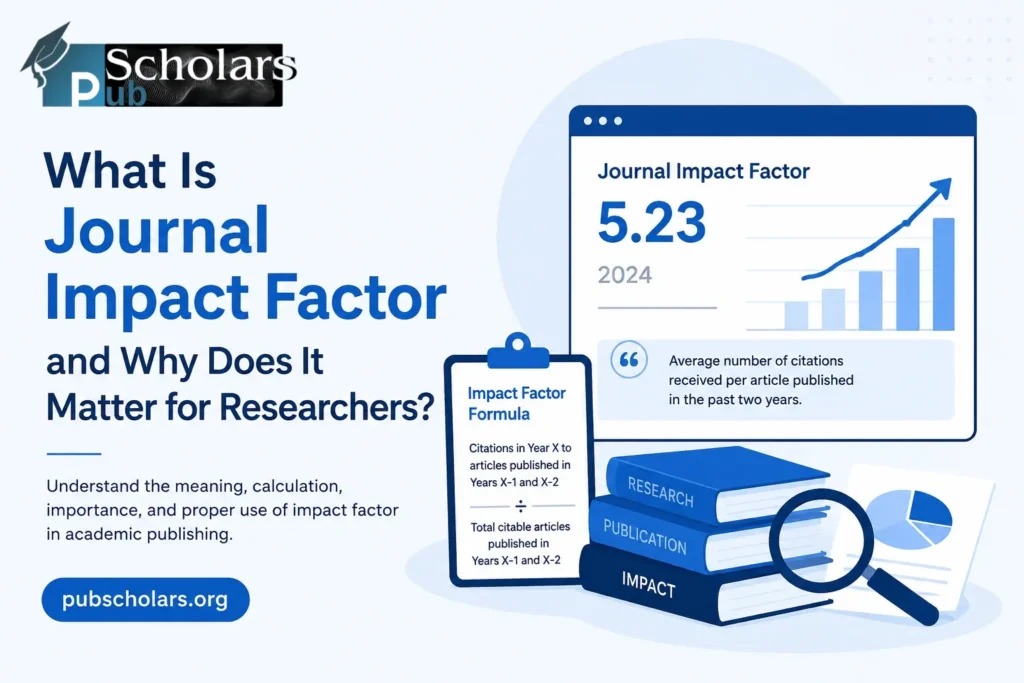
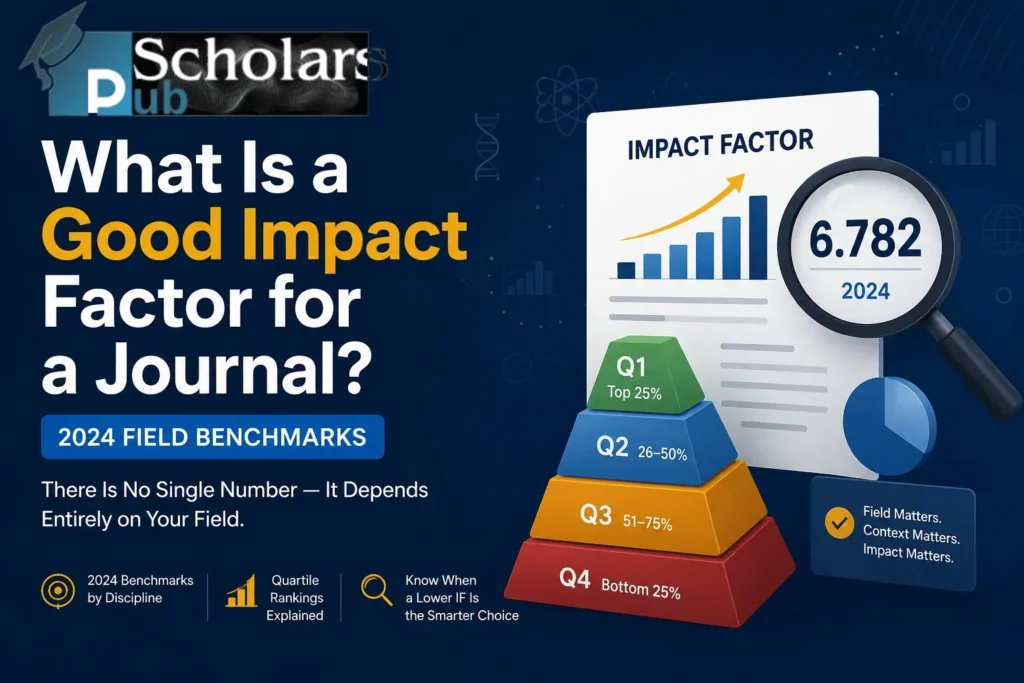
Impact factor and quartile: Within your field, where does this journal sit? Use scimago.org (free) or JCR (institutional access) to check quartile ranking. Before targeting a journal based on its IF number alone, it helps to understand what a good impact factor actually looks like in your specific discipline a score of 3.0 can represent a Q1 journal in mathematics yet only Q3 in molecular biology.
Open access: Does your funder or institution require OA publication? If so, identify journals with your funder’s preferred licence (CC BY) and check APC costs.
Turnaround time: How quickly does the journal typically reach a first decision? SciRev (scirev.org) contains researcher-contributed turnaround data for specific journals.
Acceptance rates: High-IF journals typically accept 5–30% of submissions. Assess your paper’s significance honestly against the journal’s tier.
Tools for journal discovery
- JANE (Journal/Author Name Estimator): paste your abstract for ranked journal suggestions
- Elsevier Journal Finder, Springer Journal Suggester, Wiley Journal Finder
- Citation analysis: look at where your key references were published — those journals reach the audience most likely to cite your work
Build a ranked shortlist of 5–8 candidate journals before you start writing
Step 3: Prepare Your Manuscript
Every journal has specific author guidelines. Read these before writing — not after. They specify word limits, required sections, formatting requirements, reference style, figure specifications, and ethical declarations.
Standard manuscript structure
| Section | Purpose | Typical length |
|---|---|---|
| Title | Concise, informative, keyword-rich | Under 20 words |
| Abstract | Background, methods, results, conclusions | 150–300 words |
| Keywords | 4–8 terms for database indexing | — |
| Introduction | Background, research gap, objectives | 400–800 words |
| Methods | Detailed enough for replication | Variable |
| Results | What you found, without interpretation | Variable |
| Discussion | What findings mean, limitations, future directions | 400–1,000 words |
| Conclusion | Key takeaways | 150–300 words |
| References | Formatted per journal style | — |
| Declarations | Ethics, conflicts of interest, author contributions | — |
Writing tips for each section
Title: Include your most important keywords naturally. Make it specific enough to attract the right readers and informative enough to stand alone. Avoid jargon that will exclude potential citers from adjacent fields.
Abstract: This is the most important section — it is what editors, reviewers, and readers encounter first. Write it last, once you know exactly what your paper says. Every sentence should earn its place. Note that abstract writing for journal papers differs from writing a conference abstract, which follows a different structure and word-count convention — if you plan to present your findings at a conference before or after journal submission, that guide covers the conference-specific format in detail.
Introduction: Start broad, narrow to your specific problem, end with your research question or hypothesis. Cite selectively — not exhaustively. Your job is to establish the gap your paper fills.
Methods: Sufficient detail for replication is the standard. Use past tense. Reference previously published methods where appropriate. For clinical studies, follow CONSORT or STROBE reporting guidelines.
Results: Report findings without interpretation. Let the data speak. Use figures and tables to present complex data more clearly than words can.
Discussion: Interpret your results, acknowledge limitations honestly, connect to the broader literature, and identify future directions. Do not simply restate your results.
Step 4: Write an Effective Cover Letter
The cover letter is your first direct communication with the editor — and often the deciding factor in whether your paper goes to peer review or is desk-rejected.
A strong cover letter answers four questions in the first three paragraphs:
- What did you do and what did you find?
- Why does it matter beyond your immediate field?
- Why is this specific journal the right home for this paper?
- Are there any ethical or administrative matters to declare?
Keep it to one page. Address the editor by name where possible. Name a recent paper published in the journal that relates to your work — this signals genuine familiarity with the journal, not a mass submission. State clearly that the paper is not under simultaneous consideration elsewhere.
Step 5: Submit Your Manuscript
Most journals now use online submission systems. Common platforms include Editorial Manager, ScholarOne Manuscripts, eJournalPress, and Open Journal Systems. During submission you will:
- Upload your manuscript (often blinded for double-blind review)
- Upload supplementary materials separately
- Enter author details and affiliations
- Confirm ethical declarations (ethics approval, consent, data availability)
- Suggest or exclude reviewers if the journal requests this
- Pay any submission fees (uncommon but journal-specific)
Double-check everything before clicking submit. Errors in author order, missing files, or incorrect formatting can delay the process and make a poor first impression on the editorial team.
Step 6: Navigate the Peer Review Process
After submission, your manuscript goes through several distinct stages.
Stage 1: Editorial desk review (1–4 weeks)
The editor reads your submission and decides whether it merits peer review. Rejection at this stage — known as desk rejection — is common. At selective journals, 50–70% of submissions are desk-rejected without going to reviewers.
Common reasons for desk rejection:
- Scope mismatch — the paper is outside the journal’s focus
- Insufficient significance for the journal’s readership
- Incomplete or poorly presented manuscript
- Missing ethical declarations
Desk rejection is not usually a quality judgment. It is a fit and significance judgment.
Stage 2: Finding and inviting reviewers (1–3 weeks)
If the paper passes desk review, the editor identifies 2–4 expert reviewers. This process can take 1–3 weeks as editors invite potential reviewers who may accept or decline. Reviewer scarcity is a genuine problem across all fields.
Stage 3: Peer review (4–12 weeks)
Accepted reviewers evaluate your manuscript and submit a detailed report plus a recommendation. The total peer review process — from submission to first decision — typically takes 6–20 weeks depending on the journal and field.
Stage 4: Editorial decision
Based on reviewer reports, the editor issues one of four decisions:
- Accept as is (very rare on first submission)
- Minor revisions (changes needed but the overall decision is positive)
- Major revisions (significant work required; outcome uncertain)
- Reject (paper is not suitable for this journal)
Step 7: Respond to Reviewer Comments
A revision request is not a rejection. It is an invitation to improve your paper. Handle revisions carefully:
- Address every single comment — never ignore one
- Create a detailed point-by-point response document clearly stating what you changed and where
- If you disagree with a reviewer, explain your reasoning respectfully and with evidence
- Resubmit within the requested timeframe
Do not be defensive or dismissive in your responses. Reviewers are volunteering their time and expertise. Thorough, respectful responses significantly increase your chances of acceptance.
Step 8: Acceptance, Proofing, and Publication
Once accepted, your manuscript moves to production:
- Copyediting: The production team edits for language, consistency, and house style
- Typesetting: Your manuscript is formatted for publication
- Galley proofs: You receive a formatted version for review — check carefully within the deadline (often 48–72 hours)
- Author queries: Address any specific questions from the production team
- Copyright or licence agreement: Sign copyright transfer or select your open-access licence
- Online-first publication: Your paper appears online before assignment to a specific issue
- Issue assignment: The paper is assigned to a volume and issue number (for print and formal citation)
Check proofs carefully. After publication, corrections require a formal erratum process.
Step 9: Promote Your Published Paper
Publication is not the end of the dissemination process — it is the beginning.
Immediate actions (within 24 hours of publication):
- Share on LinkedIn, Twitter/X, and ResearchGate with an accessible summary of your findings
- Update your ORCID record, Google Scholar profile, and institutional webpage
- Upload to your institutional repository if required by your funder or institution
- Email the paper to direct collaborators and colleagues in related areas
Within the first week:
- Write an accessible summary for your institution’s news channel or a public platform like The Conversation
- Post a preprint if you did not before submission (check journal policy)
- Submit for relevant post-publication recognition programmes (e.g., Altmetric highlights)
Ongoing:
- Track citations via Google Scholar, Scopus, and Web of Science
- Respond to enquiries from other researchers who contact you about the paper
- Present the findings at conferences where your target audience is present
Typical Publication Timelines
| Stage | Typical Duration |
|---|---|
| Initial editorial screening | 1–4 weeks |
| First peer review round | 4–16 weeks |
| Revision by authors | 1–3 months |
| Second review round | 2–8 weeks |
| Acceptance to online publication | 2–8 weeks |
| Online to print issue | 1–6 months |
Total time from first submission to publication: typically 6 months to 2 years. High-IF journals with multiple revision rounds trend toward the longer end.
Common Mistakes That Delay or Prevent Publication
- Submitting to the wrong journal — scope mismatch is the single most common cause of desk rejection
- Ignoring author guidelines — formatting errors signal inexperience and slow down processing
- Writing a generic cover letter that could have been sent to any journal
- Submitting before the work is truly ready — incomplete manuscripts waste everyone’s time
- Giving dismissive or incomplete responses to reviewer comments
- Simultaneous submission — submitting the same paper to two journals at once is an ethical violation
Pre-Submission Checklist: Is Your Manuscript Ready?
Before you click submit, run through this checklist. Incomplete manuscripts are a leading cause of editorial delays and avoidable desk rejections.
Scientific completeness
- Research question clearly defined and the answer clearly stated
- Methodology reported in sufficient detail for replication
- Statistical analyses appropriate and correctly described
- All relevant controls included and reported
- Conclusions proportionate to the data — no overclaiming
Manuscript formatting
- Author guidelines read in full and followed
- Word count within the journal’s limits
- All required sections present (Title, Abstract, Keywords, Introduction, Methods, Results, Discussion, Conclusion, References, Declarations)
- References formatted in the journal’s required style
- Figures at correct resolution (typically 300 dpi for print)
- Supplementary materials properly labelled and cross-referenced
Administrative requirements
- All authors have approved the final version
- Ethics approval statement included (for human or animal research)
- Informed consent statement included where applicable
- Data availability statement prepared
- Conflicts of interest declaration completed by all authors
- Funding acknowledgements complete and accurate
- Author contributions statement (CRediT format where required)
Cover letter ready
- Addressed to the correct editor (check the journal’s current editorial board)
- Clear statement of the primary finding and its significance
- Specific connection to this journal’s scope and recent content
- Confirmation that the paper is not under simultaneous consideration
- Suggested reviewers (if the journal requests these)
Understanding the Full Publication Timeline
One of the most common sources of frustration for researchers is underestimating the time between submission and publication. Here is a realistic breakdown of every stage:
| Stage | Who is responsible | Typical duration |
|---|---|---|
| Initial submission processing | Editorial office | 1–5 business days |
| Editor assignment | Managing editor | 1–7 days |
| Desk review decision | Handling editor | 1–4 weeks |
| Reviewer invitation and acceptance | Editor | 1–3 weeks |
| Peer review | Reviewers | 4–12 weeks |
| Editorial decision | Editor | 1–2 weeks after reviews received |
| Author revision | You | 1–8 weeks |
| Second review (if major revisions) | Reviewers | 3–8 weeks |
| Final acceptance decision | Editor | 1 week |
| Production and proofing | Publisher | 2–8 weeks |
| Online-first publication | Publisher | 1–7 days after proof approval |
| Issue assignment | Publisher | 1–6 months |
Total time from first submission to online publication: 6 months to 2 years, with high-IF journals and multiple revision rounds trending toward the longer end.
Minimising Your Timeline
Several factors within your control can meaningfully reduce your time to publication:
Submit to the right journal first. The most time-consuming single event is a desk rejection after 4+ weeks at an inappropriate journal. A well-matched submission that goes straight to peer review is faster than two sequential rejections at the wrong tier.
Submit a complete, polished manuscript. Manuscripts with obvious formatting errors, missing declarations, or incomplete references get sent back before editorial review — adding 2–4 weeks of delay.
Respond to revisions quickly. Most journals give authors 1–3 months for major revisions. Authors who respond in 2–4 weeks rather than 3 months meaningfully compress their total timeline.
Choose journals with faster review cycles. Check SciRev (scirev.org) for researcher-contributed turnaround data on your target journals. In competitive fields, 4-week first decisions (increasingly offered by some publishers) vs. 16-week decisions represent a 3-month difference in your timeline.
Post-Publication: What Happens to Your Paper Next
Indexing
Once published, your paper is indexed in the databases that cover your journal. For Web of Science-indexed journals, new articles typically appear in the database within days to weeks of publication. For Scopus, similarly. Google Scholar indexes new content very quickly, often within hours of online posting.
You can verify indexing by searching your paper’s DOI in each database.
Altmetric Tracking
Many publishers automatically track altmetric scores — measuring online attention through mentions in news media, policy documents, social media, and reference managers. Your paper’s altmetric score appears on its published page via the Altmetric donut badge. High altmetric scores for a newly published paper are a useful signal of immediate visibility.
Citation Tracking
Set up Google Scholar citation alerts for your paper’s title. You will receive email notifications each time a new paper citing yours is indexed, giving you near-real-time awareness of who is building on your work.
Responding to Enquiries
Other researchers will occasionally contact you with questions about methods, data, or materials. Respond promptly and helpfully — these interactions are the lifeblood of scientific collaboration and frequently lead to productive ongoing partnerships.
Frequently Asked Questions
Can I submit to multiple journals at the same time?
No. Simultaneous submission — submitting the same manuscript to two journals concurrently — is prohibited by virtually all journals and violates publication ethics. Always wait for a decision from one journal before submitting elsewhere.
What is open access publishing and should I use it?
Open access means your paper is freely available to anyone online without a paywall. It is increasingly mandated by funders. APCs (article processing charges) typically range from $500 to $5,000+. If your funder mandates OA, check whether they provide APC funding. Many publishers offer APC waivers for researchers from low-income countries.
How long does it take to publish a research paper?
From first submission to online publication, 6 months to 2 years is typical. Factors include journal review speed, number of revision rounds, and production timelines. Using preprint servers and targeting appropriately-matched journals are the most effective strategies for reducing the overall timeline.
How do I know if my research is ready to publish?
Your research is ready when: the question is clearly defined and answered, the methodology is sound and fully documented, the results are statistically valid, the conclusions are proportionate to the data, and you have honestly assessed whether the contribution is genuine and meaningful. If you are unsure, seek feedback from a trusted senior colleague before submitting.
What is the difference between online-first and final publication?
Online-first (or ahead-of-print) means your paper is published on the journal’s website with a DOI but without a volume/issue/page number assignment. It is fully citable and counts as published. Final publication assigns the paper to a specific volume and issue, typically months later, and is used for formal citation in print and some databases.
Useful guides for researchers publishing their work
These PubScholars resources will help you at each stage of the journal publication process:
- How is journal impact factor calculated? — the official JIF formula, citation windows, citable items, and three worked examples
- Does impact factor affect manuscript acceptance chances? — what IF signals about desk rejection rates, selectivity, and submission strategy
- Which journals have the highest impact factor? — field-by-field rankings across medicine, biology, chemistry, and physics
- Conference papers vs journal papers — key differences in scope, peer review, citation weight, and publication route
Conclusion
Publishing a research paper is a structured process that rewards preparation, attention to detail, and persistence. Every stage — from journal selection to peer review response to post-publication promotion — offers an opportunity to strengthen your work and its impact. The process can feel slow and uncertain, but the researchers who publish most consistently are those who approach each stage strategically, respond to feedback constructively, and treat every rejection as information for improving their next submission.

I am a seasoned professional with over 9 years of transformative experience in the domains of molecular biology, immunology, and clinical research. With a career that spans from 2006 to 2018, my journey has been marked by a relentless pursuit of scientific excellence and an unwavering commitment to improving healthcare outcomes through groundbreaking research. I have worked at one of India’s premier medical institutions, AIIMS(All India Institute of Medical Sciences), where I contributed significantly to the fields of molecular biology and clinical research. My expertise in protein analysis and genetic studies allowed me to identify potential biomarkers and improve diagnostic accuracy, contributing to better healthcare outcomes for patients. Notably, the research work has been published in prestigious scientific journals such as the Indian Journal of Ophthalmology and the British Journal of Ophthalmology.
Publication in these esteemed journals reflects my commitment to advancing medical science and sharing insights with the global research community. These publications highlight my expertise in areas ranging from gene polymorphism and immune response mechanisms to the effects of chronic drug therapy, all contributing to the larger body of scientific knowledge. My passion for scientific communication led me to pursue an Executive Diploma in Medical Writing from CliMed Research Solutions and Curio Training and Research Institute (CTRI), India. This certification has further refined my ability to bridge the gap between complex scientific research and its practical applications in healthcare. My passion for content writing drives me to continuously create content that derives engagement ,build trust, and leaves a lasting impression on readers”.